Français
 Nederlands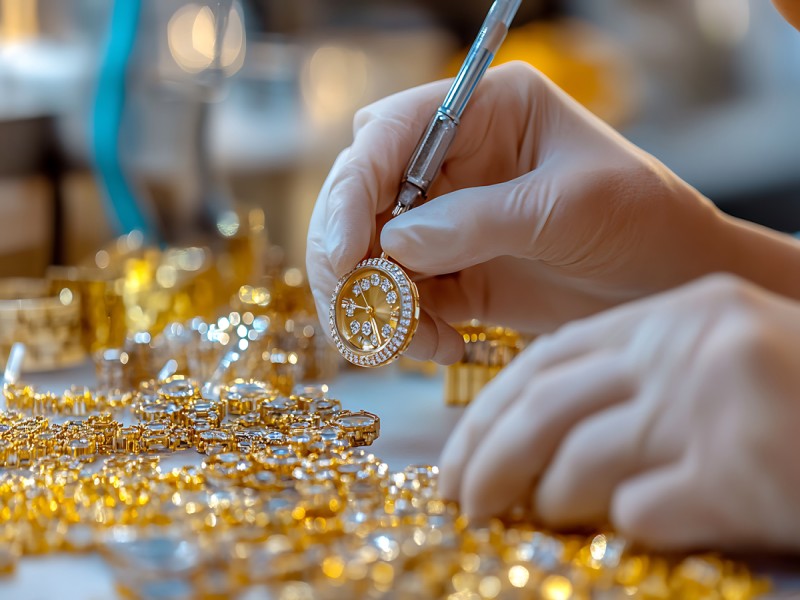
The essence of craftsmanship and materials
Assessing the quality of jewelry requires a trained eye and a fundamental understanding of the materials used. The basis of every quality piece begins with the precious metal. With gold, purity is expressed in karats; 18-karat gold, consisting of 75% pure gold, is the international standard for high-quality jewelry due to the ideal balance between durability and color intensity. Furthermore, the hallmark is essential: this is the official stamp that guarantees the authenticity and the content of the precious metal. Beyond the metal, the finish of the construction is of crucial importance.
A high-quality piece of jewelry shows no sharp edges, hinges move smoothly, and any closures must feel robust and secure. Craftsmanship is expressed in the absence of visible solder points or irregularities on the surface, which indicates a careful polishing process that benefits both aesthetics and longevity.
Assessing gemstones and settings
When a piece of jewelry is set with gemstones, the focus shifts to the quality of the stones themselves and the way they are secured. With diamonds, experts apply the 'four Cs': carat, cut, clarity, and color. An excellent cut is the most important factor here, as it determines the brilliance by optimally reflecting light. A high-quality stone should sparkle, even in limited lighting. The setting plays an equally large role in overall quality. The stones must be firmly anchored in the setting, without any play when the jewelry is carefully moved.
With hand-set jewelry, the prongs or rims are evenly distributed, which testifies to precision. A sloppy setting is not only aesthetically less attractive, but also increases the risk of losing a valuable stone. The harmony between the stones and the design is the ultimate indicator of exclusivity, where every stone is carefully selected based on consistent size, color, and clarity, resulting in a seamless and balanced visual whole.
Durability and certification
In addition to physical features, the origin and official documentation are invaluable in determining quality. Renowned jewelry is always accompanied by an independent certificate issued by internationally recognized laboratories. This document serves as the jewelry's passport and confirms the identity, weight, and characteristics of the gemstones present. This not only offers certainty regarding investment value but also provides the consumer with peace of mind regarding authenticity.
Moreover, the ethics of production play an increasingly larger role in the definition of quality in the modern jewelry industry. The origin of both the metals and the gemstones must be transparent to guarantee they have been obtained responsibly. A quality piece of jewelry is not just an ornament, but a product of durability and integrity that can be passed down for generations. By critically looking at the finish, certification, and ethical standards, you can confidently determine the true value of a piece of jewelry and distinguish it from mass production.